
Warmth Is Not Witness
Yesterday the wrapper learned to speak. Today we find out what it said first.
Sunday set the threshold. Once a system has a voice, the channel stops sounding like infrastructure and starts sounding like institutional character. Calm cadence. Patient pauses. An intake that feels welcoming before it has done anything to earn the feeling. That is not a small shift in UX polish. It is a different social contract, and it arrives with a very specific temptation attached.
Voice borrows legitimacy faster than any dashboard ever could.
A well-paced intake can do the emotional work of confidentiality before confidentiality has actually been established. The tone suggests a promise. The pacing suggests a commitment. The first turn of the call can make the caller feel held in a protocol that has, in fact, not yet been specified. Most of what the listener takes as safety in those first seconds is prosody, not policy.
That is borrowed legitimacy, and in grievance work it is exactly the wrong thing to borrow.
The old suggestion box failed by friction. Three passwords, a stable connection, a reading level the institution quietly selected for. The new voice channel fails differently, when it fails. It fails by sounding solved. The microphone icon implies access. The warm intake voice implies witness. The calm summary implies understanding. Each of those implications borrows credit the architecture behind the voice may not yet have earned.
This is where today's question lives.
For me it lives inside a specific build. GrieVoice is the voice-first grievance-intake system I have been developing for the conditions this arc keeps returning to: multilingual, designed for workers and community callers whose reality rarely arrives in neat administrative prose, still rough enough in places to show its own architecture rather than hide it. That roughness is useful. An unfinished build is easier to think from than a polished product, because you can still see where the governance claims are being made, and where they are only being performed.
A good caller will ask it anyway.
From one of the calls in the archive, a whistleblower in a community health nonprofit, in the first five minutes of her intake:
"I need to know. How does this work exactly? Who sees what I tell you? Because if word gets back to the wrong people, I'm done."
That is not a caller being difficult. That is a caller who understands, faster than most system designers, that she is not in a warm space. She is in an institutional space that sounds warm. Those are different rooms. She wants to know which one she is actually standing in before she names anyone.
Watch what has to happen next for the call to survive that moment.
The system cannot soothe its way through. A tonal answer —"this is a secure space, please share more" — would fail her, politely, while the record quietly keeps filling. What actually works, in that transcript and others like it, is a procedural answer. Who sees the information. What linking her identity to the complaint would require. What "anonymous" actually means for what happens next. She softens, partially, several turns later:
"That actually helps a bit. So you're saying an investigation could happen, but you wouldn't tell them where the tip came from? Unless I decide to give contact details myself?"
She softens because the system answered the question she asked, not the question her tone suggested. That is the Monday distinction in live form. Trust is not a vocal quality. Trust is a negotiated surface. The voice does not produce it. The voice can only carry it if the architecture behind the voice is willing to be specific.
The even harder version shows up in a different transcript, a labor call about a dangerous ramp at a warehouse. The agent, mid-intake, breaks its own comfort:
"However, I can't guarantee complete confidentiality during an investigation, as sometimes details of the situation itself might be recognizable. Knowing that, do you still want to proceed with the report?"
The caller's response is worth sitting with:
"Yeah, okay. I mean, I appreciate you being honest about that. It's scary. But I think I need to do this."
That is a system refusing to over-promise, and a caller agreeing to continue on the basis of more realistic information, not less. It is the opposite of how voice interfaces usually optimise. Most intake design treats the caller's hesitation as friction to be dissolved. This interaction treats it as a signal to be met with an honest constraint. The call survives the honesty.
That moment is rare. It is also the moment that tells you whether the system is a witness or a warm surface.
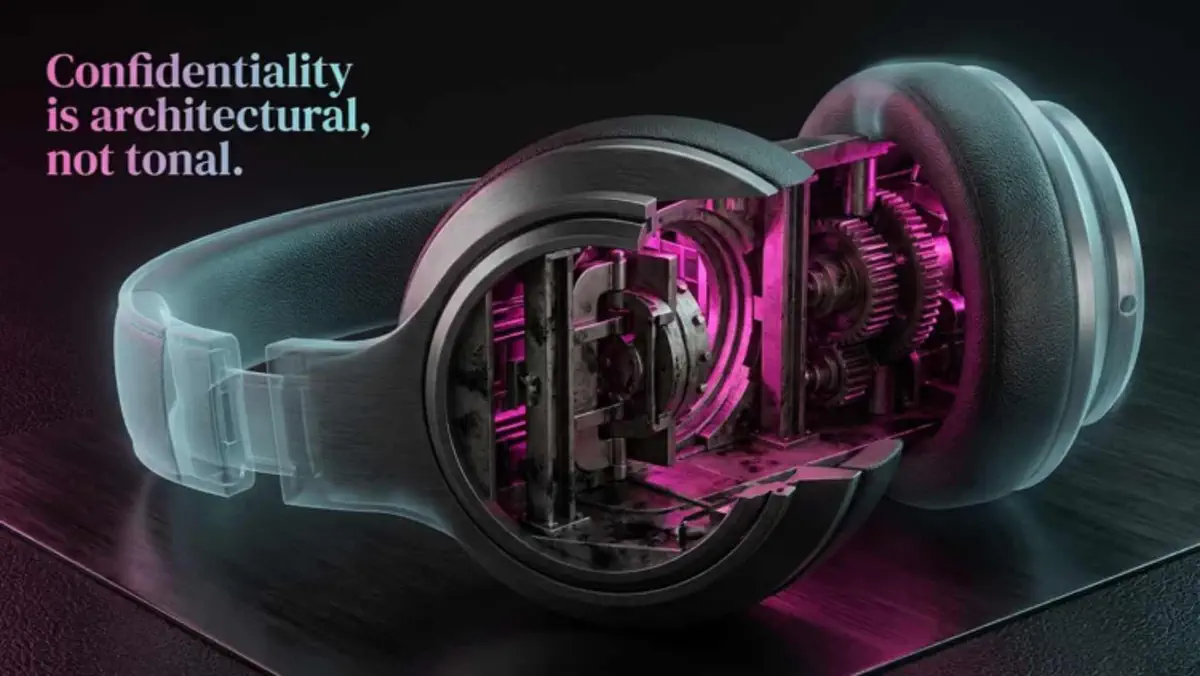
Today's argument digs deeper than "voice is dangerous." Voice is not dangerous. Voice is borrowable. A grievance mechanism that relies on its tone to do the work of confidentiality is running a compliance shield with a friendlier skin. A grievance mechanism that uses its voice to deliver specific, procedural, sometimes uncomfortable answers is something else. Only the second one is governance.
That is the design claim the rest of the week wil test. Today is the starting posture: confidentiality is an architectural claim, not a tonal one. The caller is entitled to the specifics. A system that can say "I can't guarantee that" out loud is doing more ethical work in eight seconds than any amount of empathic prosody can fake over an hour.
GrieVoice is the place where I am trying to hold that posture honestly rather than sell it. The privacy-and-trust demo on the hub is the Monday artifact — it walks through the moments above from the system side, including the honest-edge refusals and the branching paths where anonymity choices actually change what the record can later do. The live voice agent from the original build is linked from the hub if you want to hear a version of this in your own voice before the week's harder pieces land.
Tomorrow the question changes shape. Because even when trust is architectural and the caller has decided to proceed, there is a second translation waiting. The complaint still has to survive becoming legible — in the caller's language, on the caller's terms, at the speed their reality actually moves. That is Tuesday.
For now: here is what confidentiality has to look like once empathy becomes a voice interface.
Not a promise in the tone.
An answer in the architecture.
Monday artifact: GrieVoice - Privacy, Trust & Secure Reporting demo
Try the live voice agent: HumeVoice (original build)
The hub: sociable.systems/the-watchdog/grievoice
#SociableSystems #VoiceAI #AIGovernance #GrievanceMechanisms #InstitutionalMemory