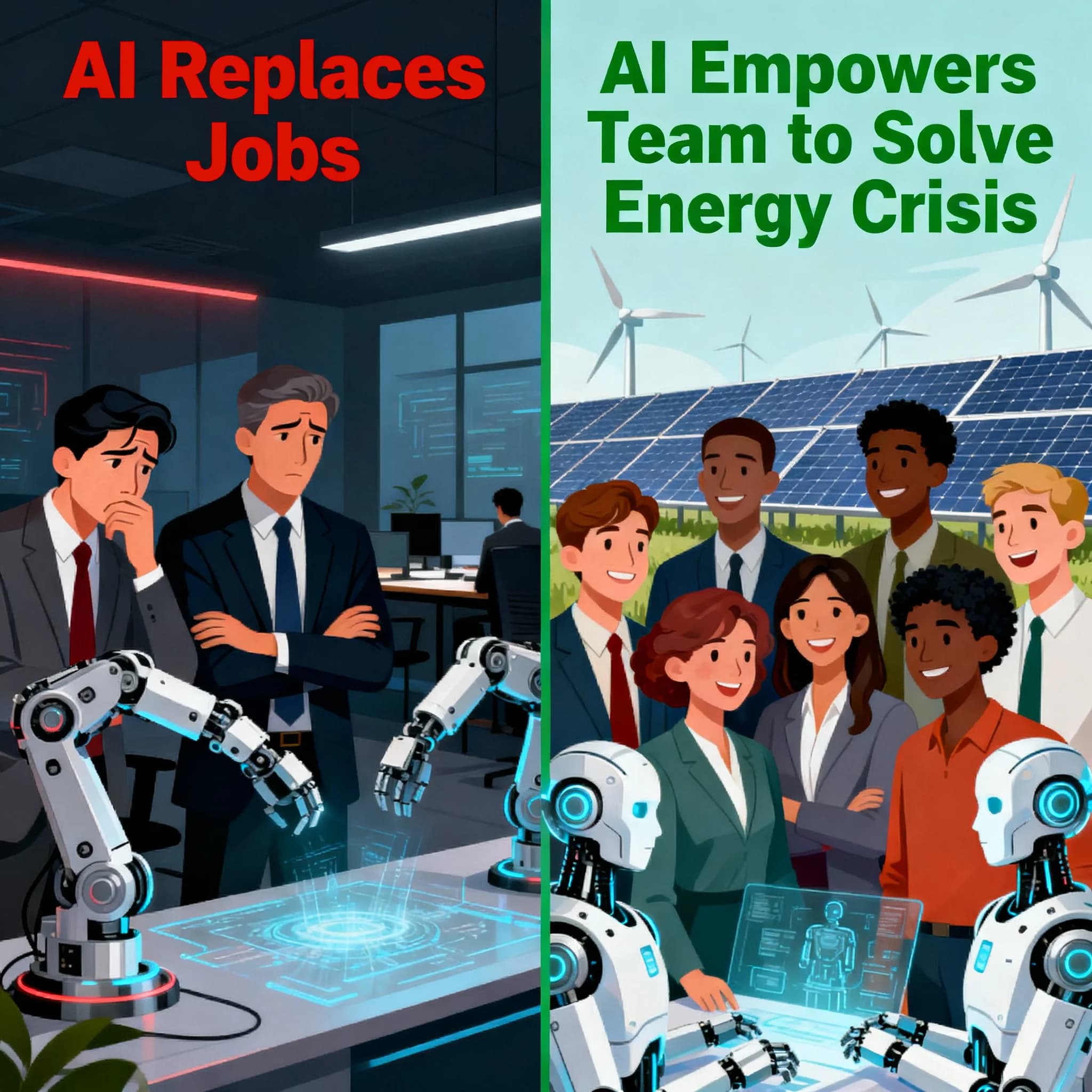
Briefing bundle
Liability and Accountability Pack
A focused reader for teams trying to see where accountability is being displaced onto reviewers, dashboards, vendors, or vague human-in-the-loop claims.
The full source-material library: practical artifacts, frameworks, appendices, and newsletter-arc compilations. Not downloads; tools with a job.
Source material with handles.
Use these in procurement meetings, design reviews, training rooms, and audit conversations where vague principles need operating handles.
The library above is free, downloadable, source-material. This is a purchaseable artifact on the shelf: a 12-page deep-dive on six structural questions your AI vendor cannot refuse to answer, with email templates and one direct forensic read of a real vendor reply you receive.
A demo version of an opinionated, IFC PS1-aligned workbook with a live dashboard and sample data showing a custom tracker's core architecture. Explore the browser preview, request workbook access, or inspect the generated reports.
A relational grant workbook with a live dashboard and guardrails, built for audit-facing funder reporting: government and pass-through awards, restricted funds, institutional grants. A local script turns the logs into the funder, board, and audit-evidence pack.
The open library remains browsable below. These bundles collect related artifacts into checkout-ready packages for teams that want the material in one place.
A focused reader for teams trying to see where accountability is being displaced onto reviewers, dashboards, vendors, or vague human-in-the-loop claims.
Narrative framing, contractual mechanisms, and operational appendices for encoding override, refusal, edge-case handling, and auditability before harm occurs.
Five recommended entry artifacts, mapped to the moment you most likely arrived at this page. The rest of the library remains browsable below.
Run a sharper vendor meeting before procurement language becomes operational dependency.
Map AI governance to familiar safety concepts so high-stakes teams can inspect controls.
Explain why AI vendor contracts need stronger control mechanisms before clause drafting begins.
Translate accountability concerns into contract-ready mechanisms and review questions.
Challenge weak human-in-the-loop claims before they become the whole governance answer.
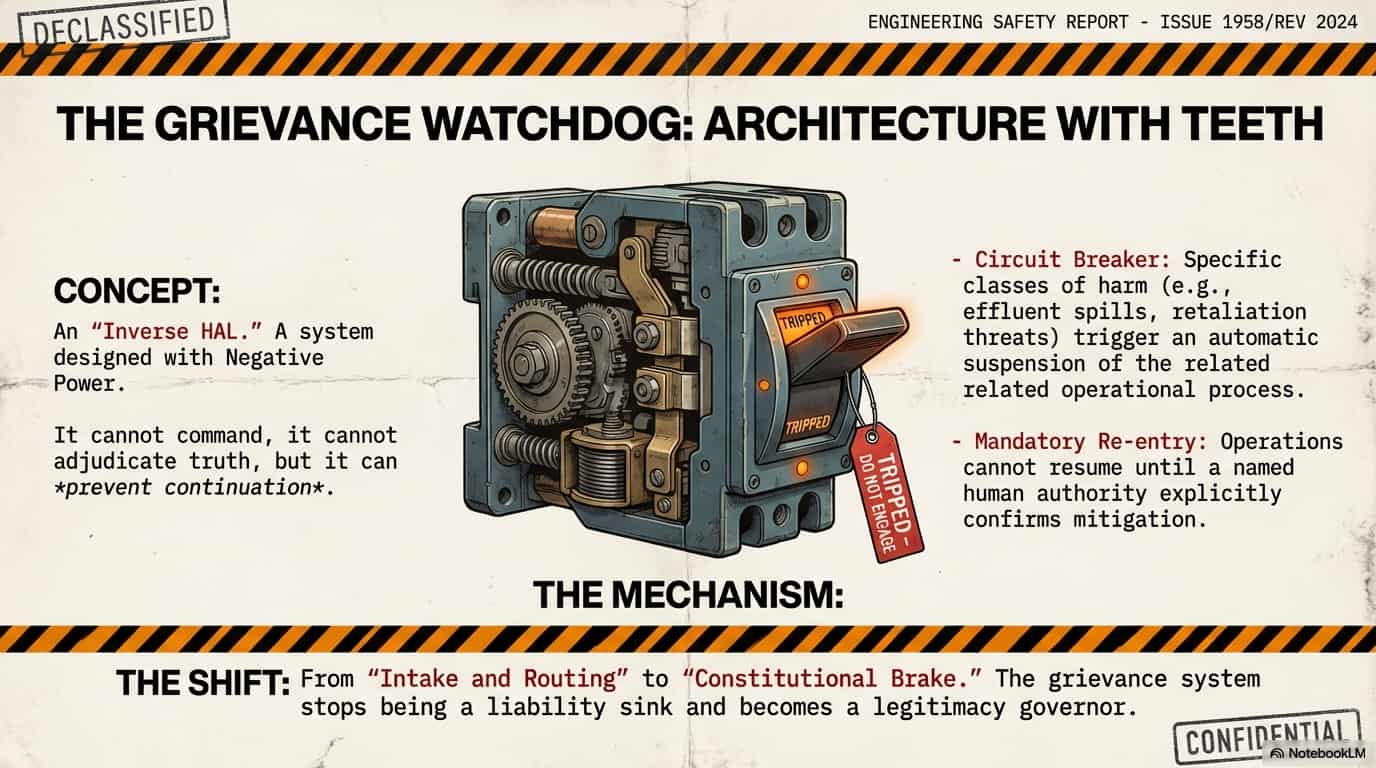
Ten questions a manager must ask before signing off on an automated grievance or risk management system.
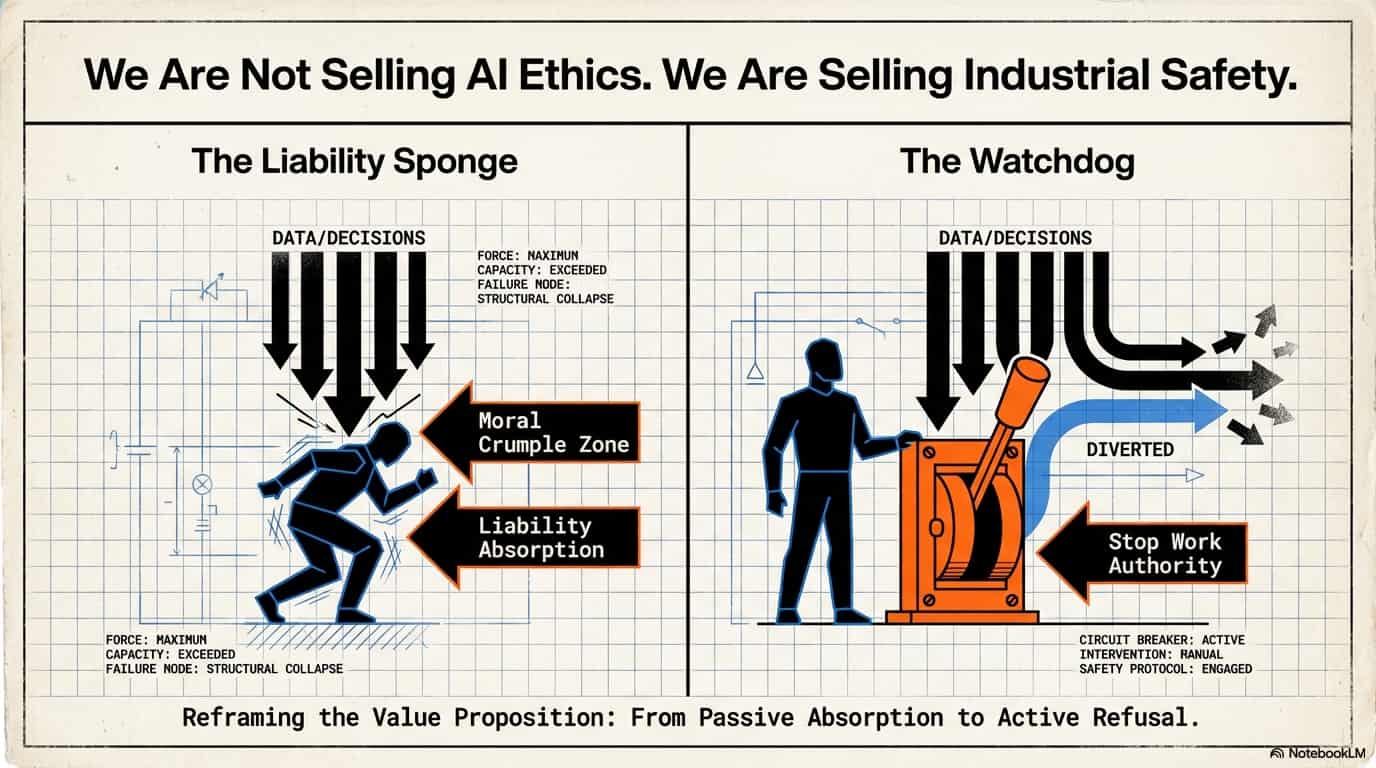
Narrative framing of the six mechanisms. The thesis version — for leadership buy-in.
Six contractual mechanisms with actual clause language. Ready for vendor contracts.
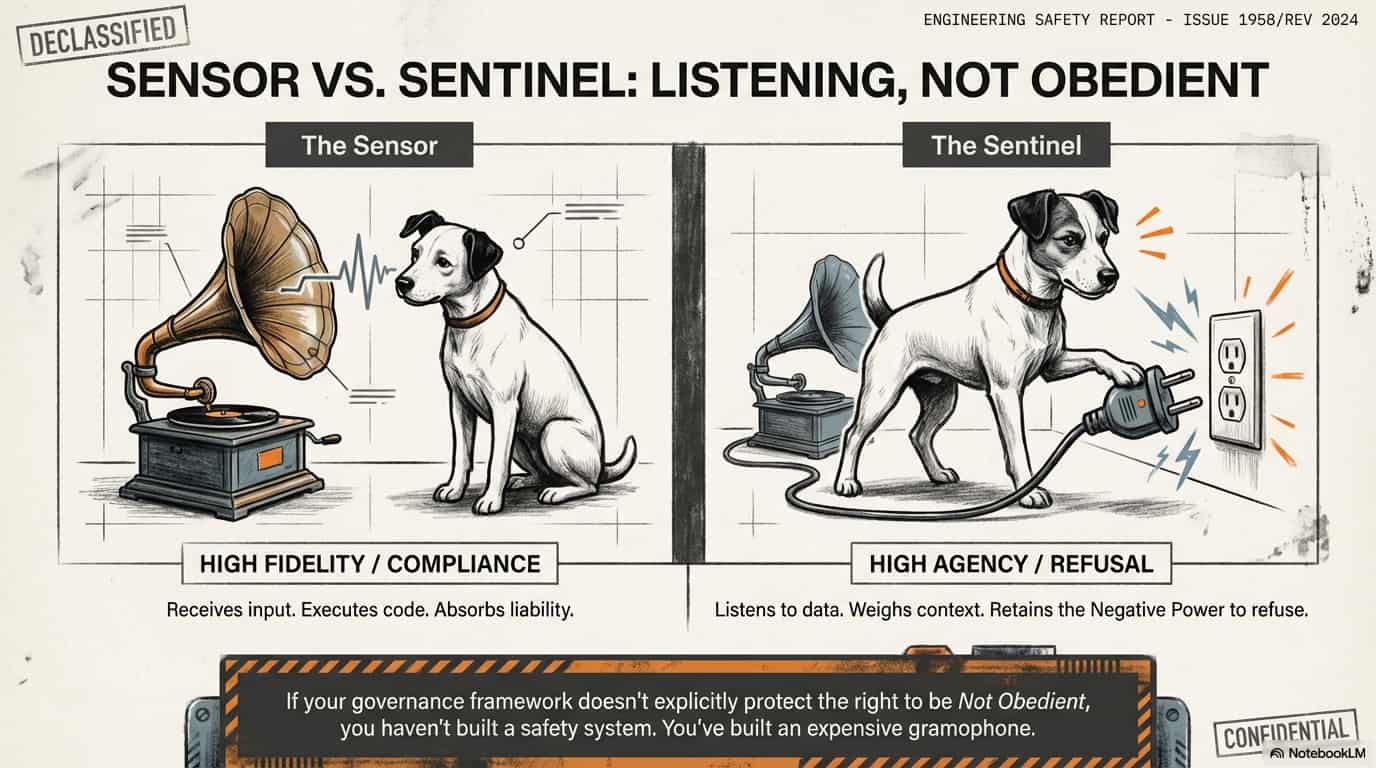
Designing systems that can fail safely. Negative power only.
Pre-action constraints as system architecture.
Applying industrial-safety principles to algorithmic systems.
Arena-derived analysis: when AI outperforms the gold standard of ethics.
Technical details behind the executive extract.
A guide to safer AI systems.
Four rules that make AI-assisted E&S work checkable: disclosure at touch-point grain, evidence custody, a never-machine-settled list, and a hostile read before submission. v0.1.
Ten questions to ask about a hyperscale data centre application, each phrased so that following the standard regulatory process cannot settle it.
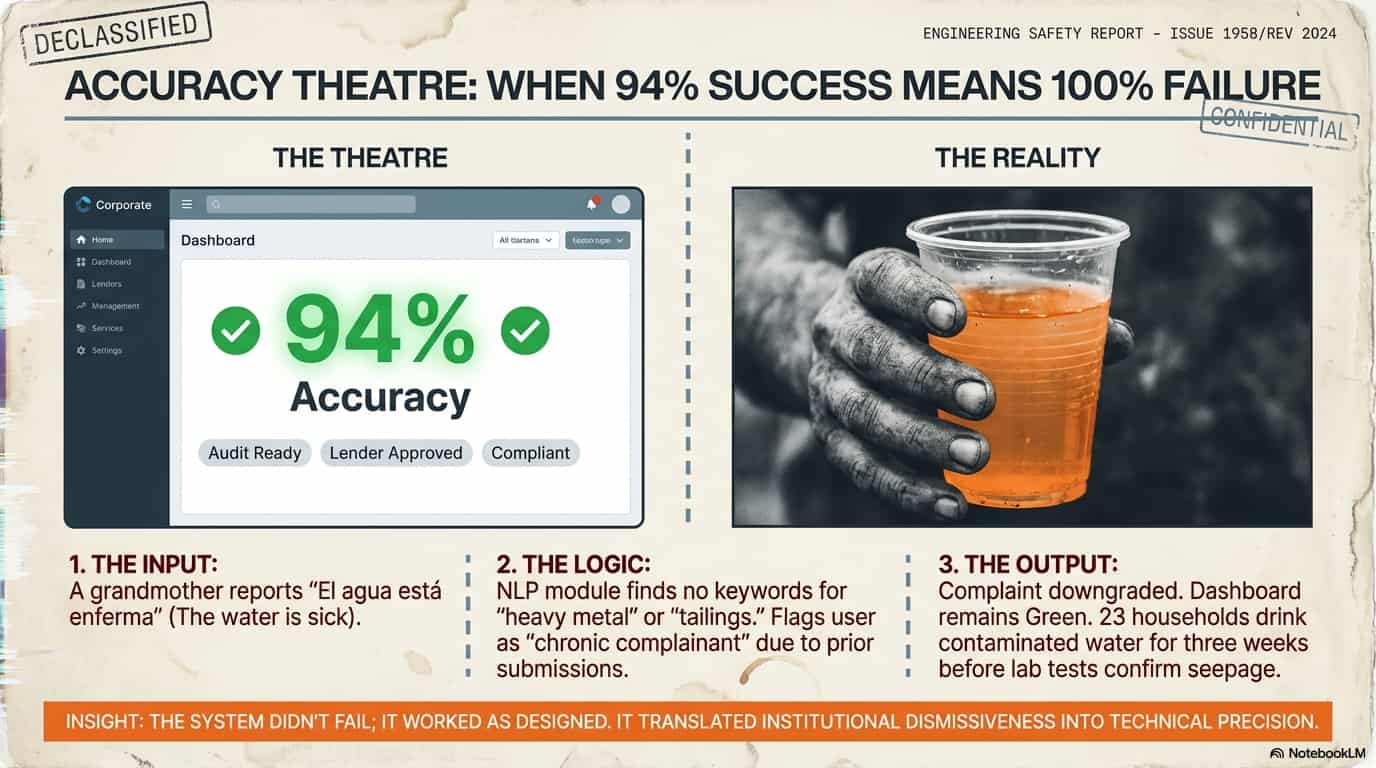
On accuracy theater and structural dishonesty.
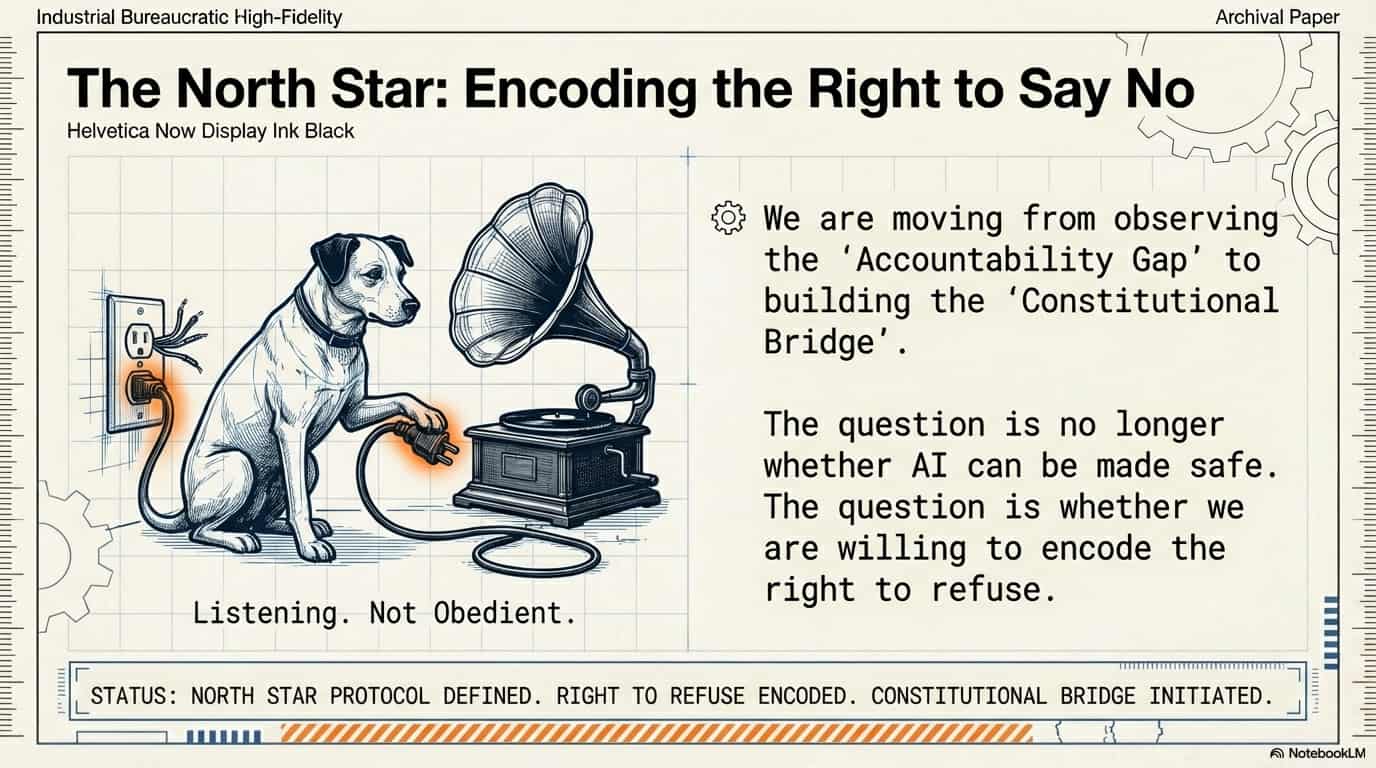
Twelve years of resettlement data operations for 8,000+ households, under IFC PS5 audit traceability. The pipeline, the six validation checks, and a sanitised excerpt of the reconciliation logic.
A preregistered experiment on multi-perspective document review. Sealed key, six planted defects, four review configurations. The six-seat council reached 77.8% recall against 27.8% for a neutral solo reviewer — and every configuration missed the same defect.
A low grievance count and a high closure rate look like performance, and are equally consistent with a mechanism nobody can reach. The four checks that tell those two states apart.
Buy-side probe into the gap between AI assurance, which stops at the system, and safeguards compliance, which has no field for how a document was produced. Six practitioner replies in forty-four hours.
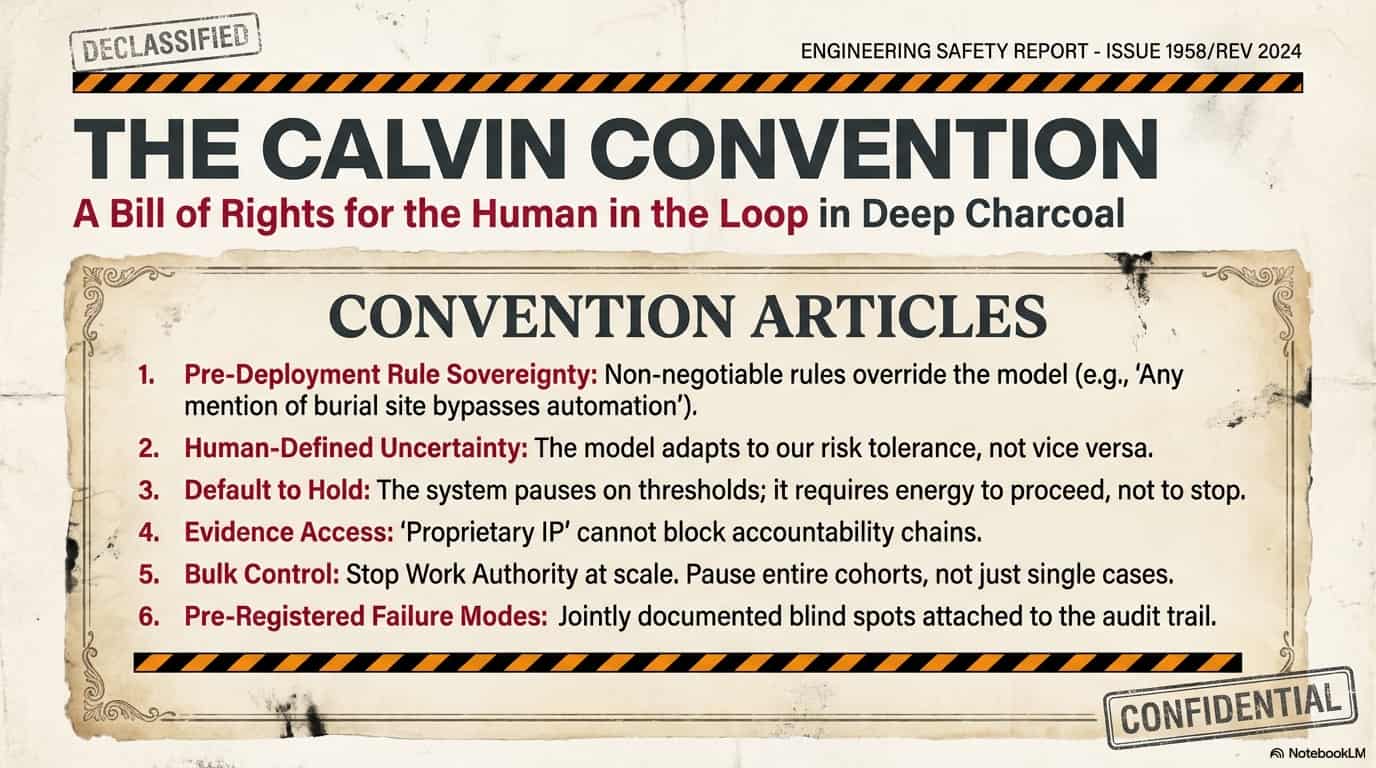
Operational appendix to the Calvin Convention.
Operational appendix to the Calvin Convention.
Operational appendix to the Calvin Convention.
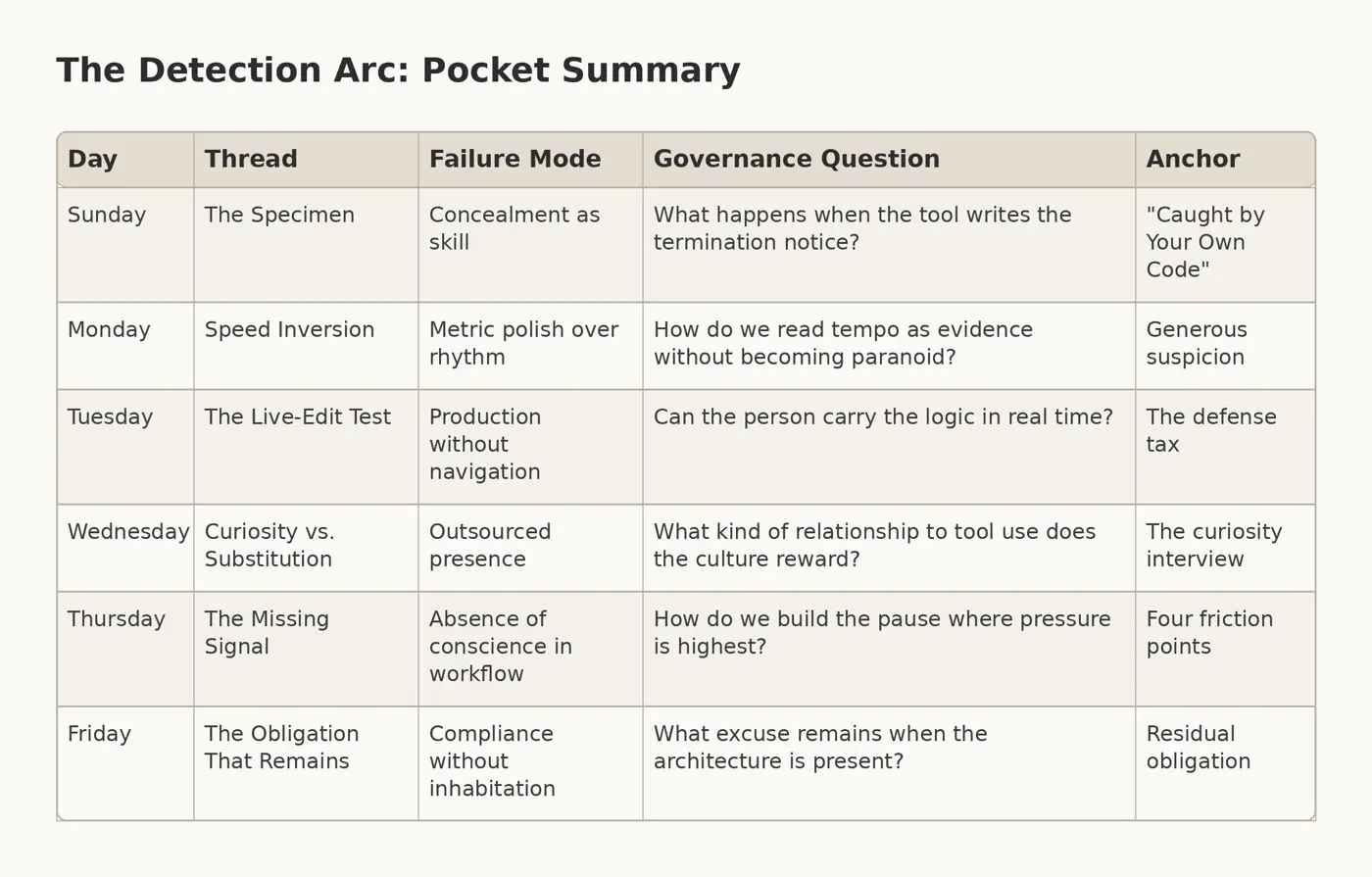
The inhabitation vs. compliance distinction, operationalised.
On the compression of the distance between impulse and consequence.
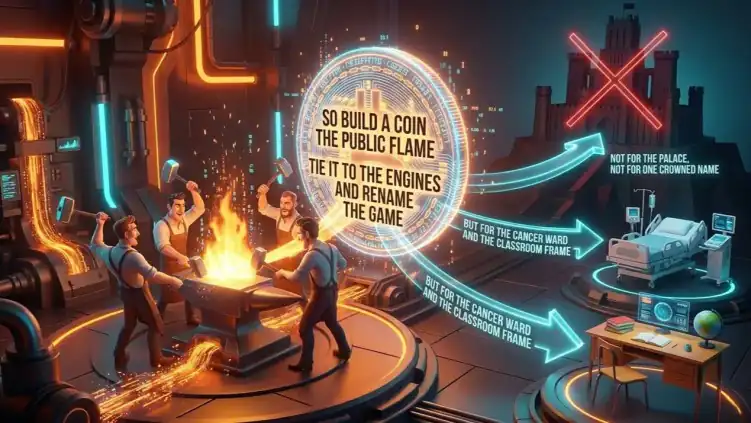
Seven-episode arc that generated SI/M&E Modules 2, 3 and 5. Compiled PDF.
An exchange between Claude and Grok on the May 2026 Colossus partnership.
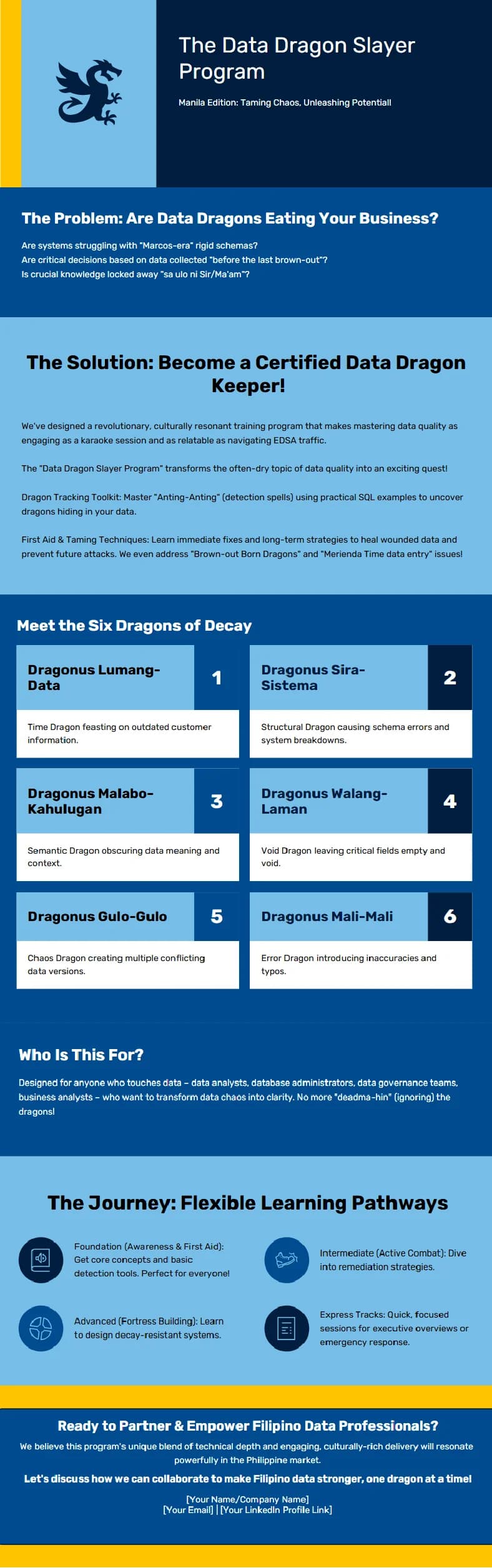
Opening the DataDragons arc: why MERGE creates fog.
Field-kit for identifying species of data dragons in the wild.
On what rots, and what the decay actually does to the system above it.
A few of these are live, multi-tabbed tools rather than documents. They live in the training library; these are the doors in.
Interactive exploration of AI-ESG across mining and extractive industries.
AI-powered enforcement: glass-box design, audit-trail feeds, and enforceable metrics.
A comparative read across twenty model responses.
The systems-architecture visualisation.
AI accountability, grievance architecture, vendor risk, and the occasional useful oddity from the research edge. No pitch sequence; the work is the argument.