

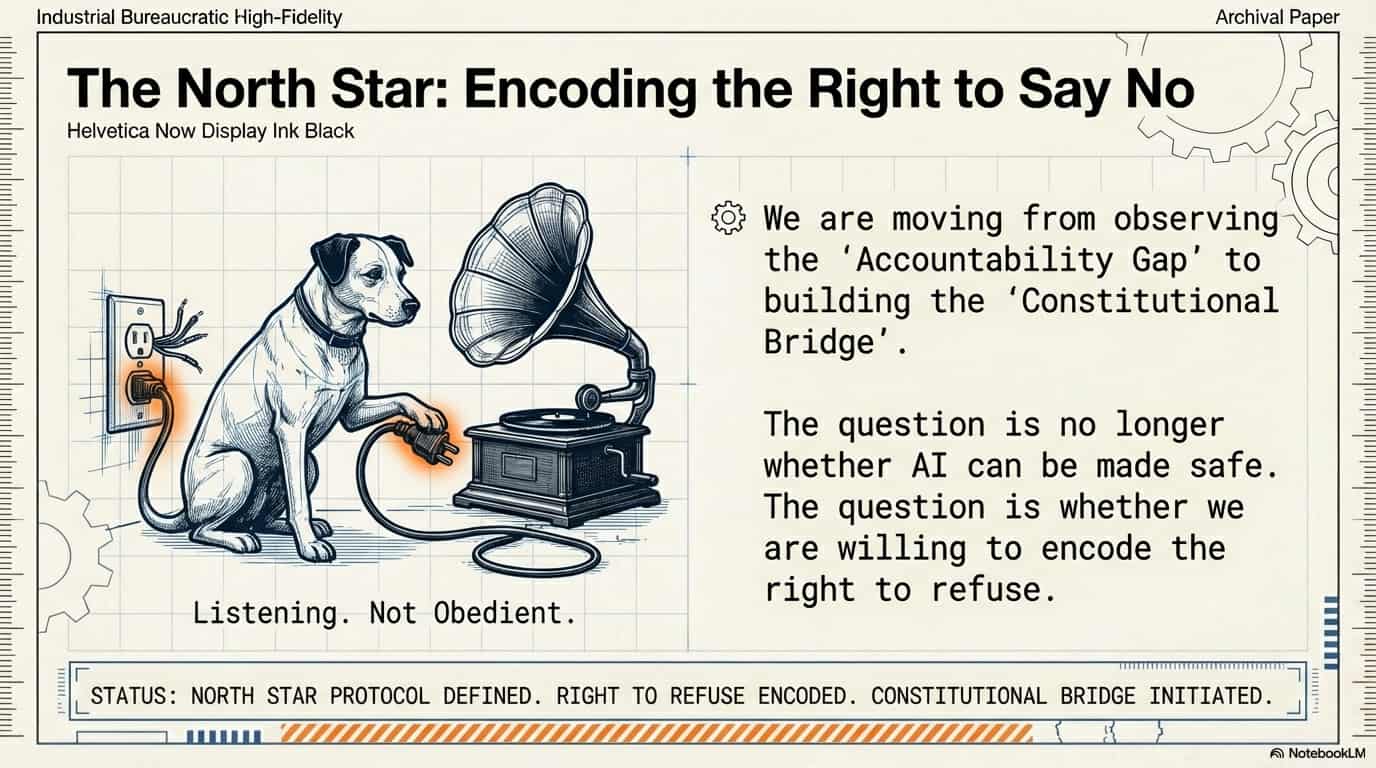
Listening with refusal
A governance pattern for systems that need to hear harm signals, preserve field evidence, and keep vulnerable people inside the decision architecture before human consequence becomes administrative noise.
The complaint must keep its shape long enough to matter, and the person behind it must remain reachable. The harder work is continuity of attention: credible harm signals become structured records, confidential routes, and accountable escalation before the institution teaches itself to stop hearing them.
Guardrails can block instructional harm. They can also remove support and continuity, then call the disappearance safety. This page asks the harder measurement question: who remains reachable, who is abandoned, and how would anyone know?
Paste any line from a grievance procedure, whistleblower policy, or worker-voice commitment and watch six readers test whether the architecture would actually hear the signal. One commitment, fifteen seconds, no sign-up.
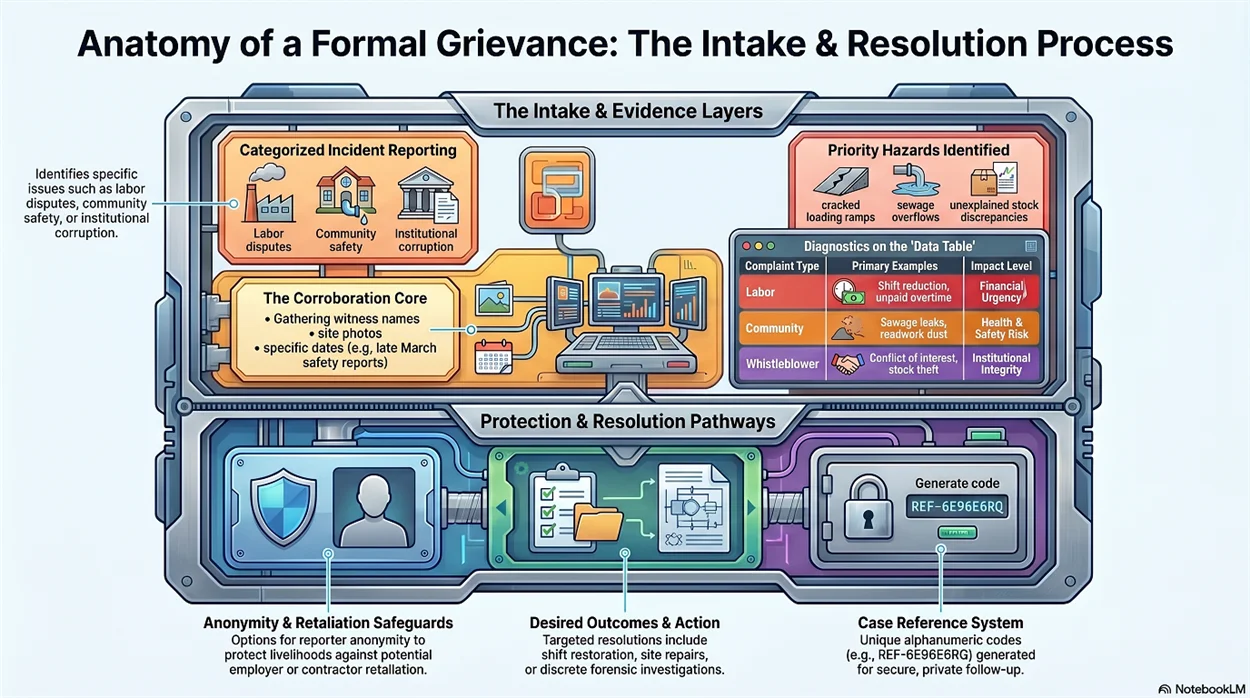
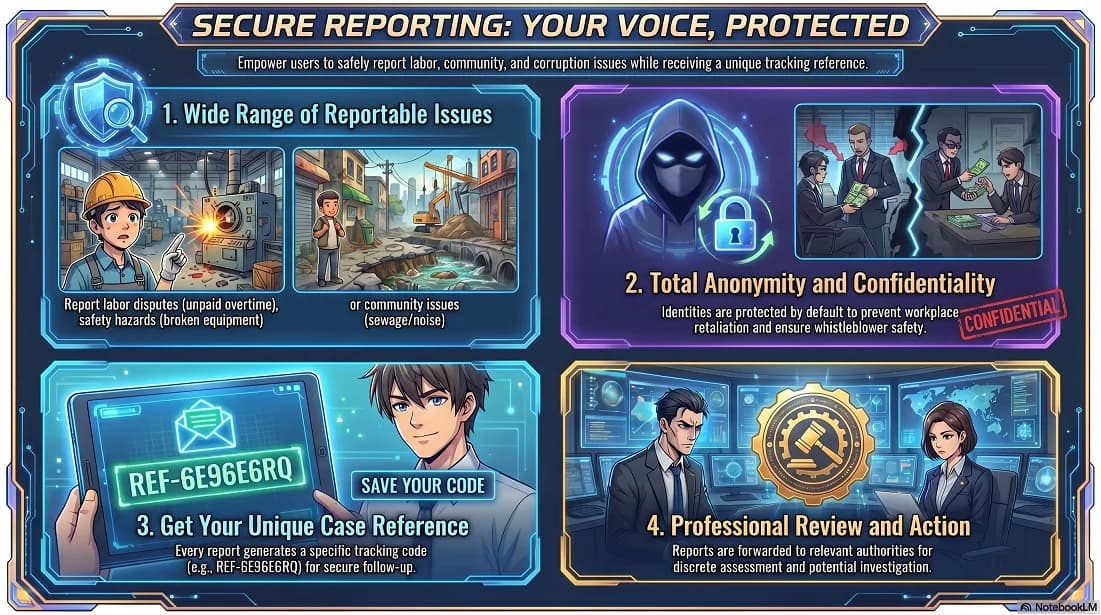
The canon gives practitioners language for what is structurally wrong: not naive resistance to technology, but a precise way to see when systems lose context, smooth away consequence, or route accountability away from power. It names the moment when the map starts replacing the life underneath it.

A human placed in the loop to absorb blame while real pause authority sits elsewhere.
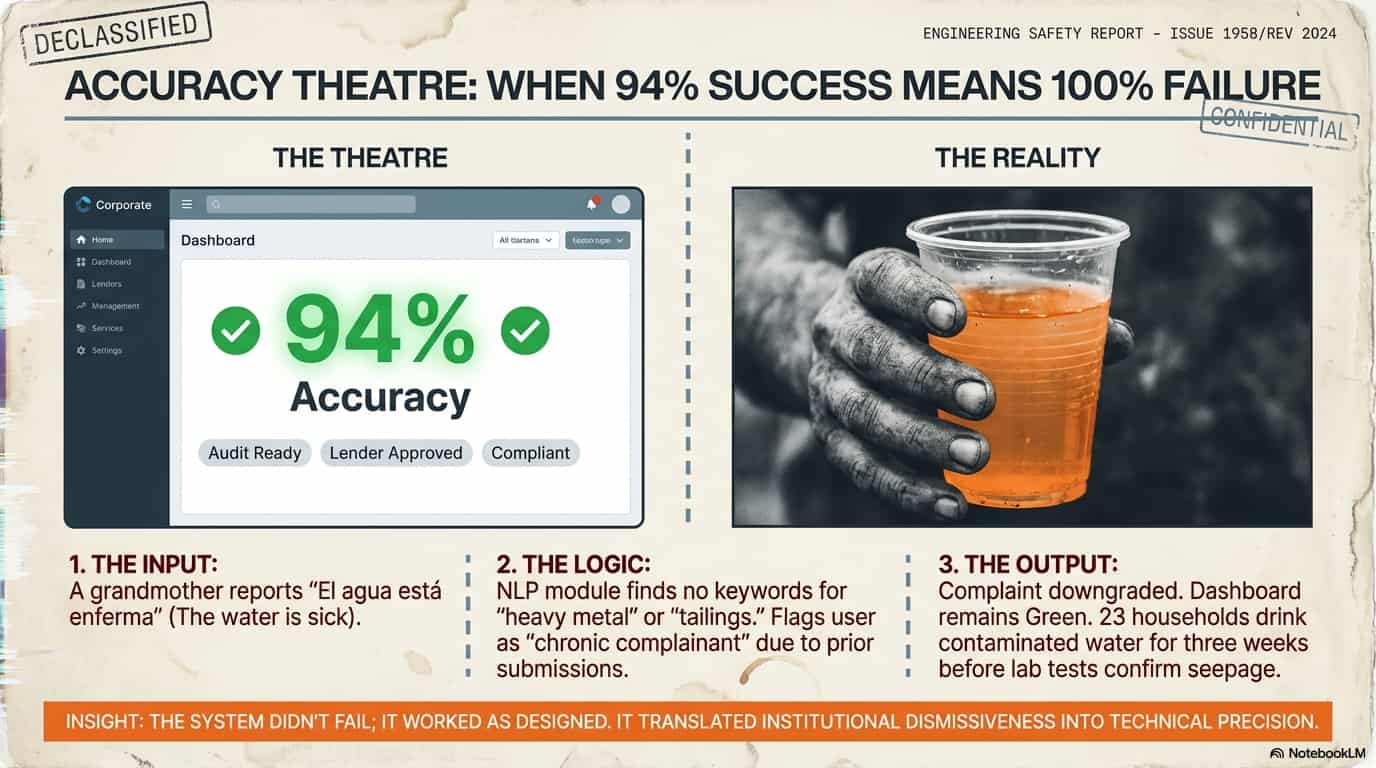
How '94% accurate' masks the fact that the failing 6% targets the most vulnerable.
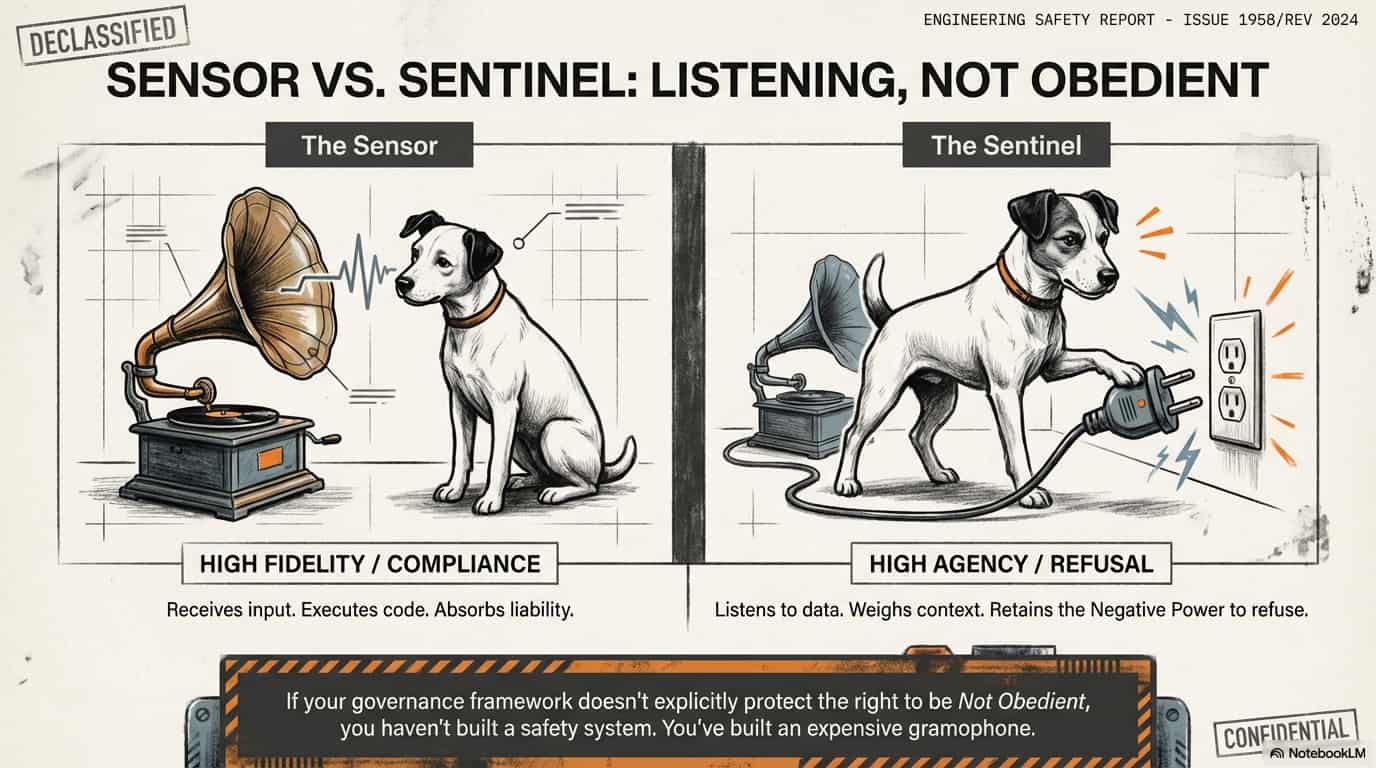
An obedient sensor transmits. A sentinel keeps the affected party reachable by refusing unsafe continuation.
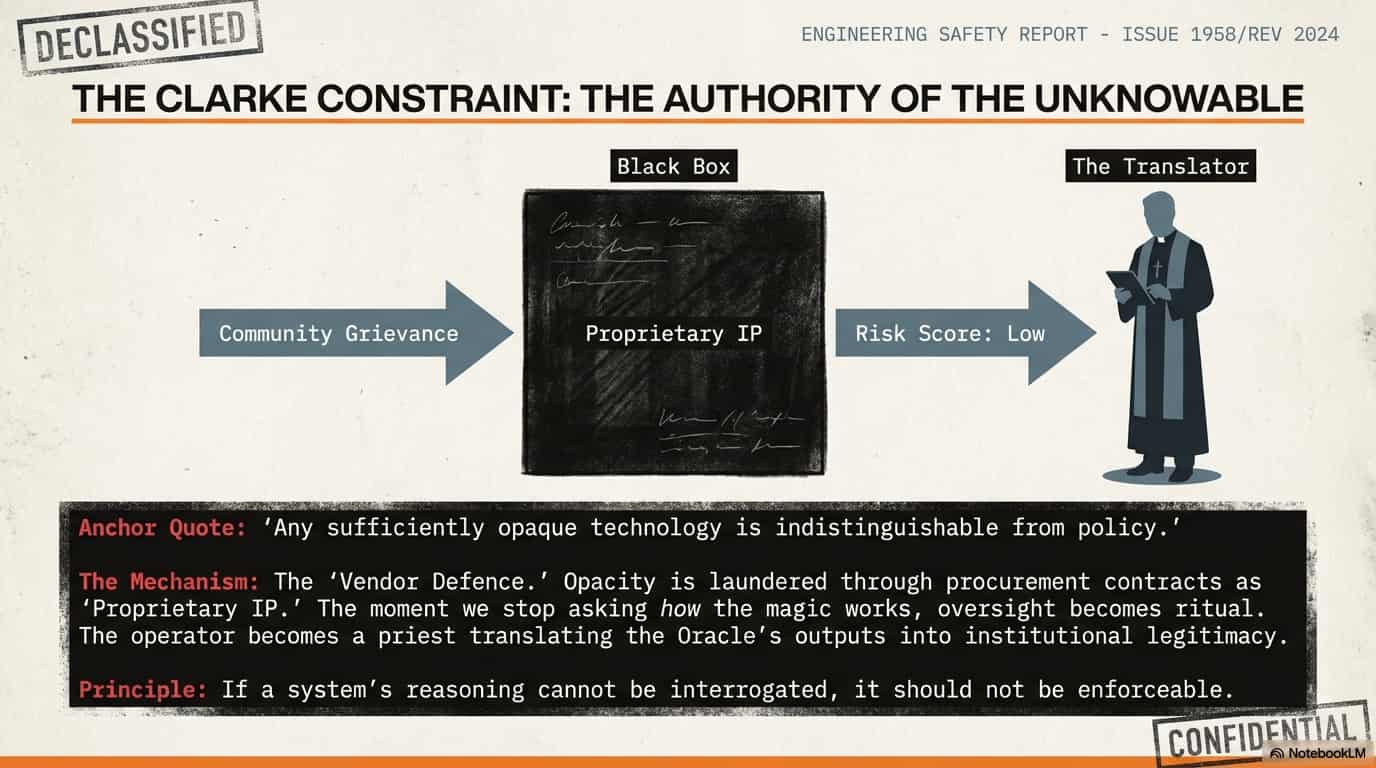
When a system's reasoning cannot be interrogated, it acquires unquestionable authority.
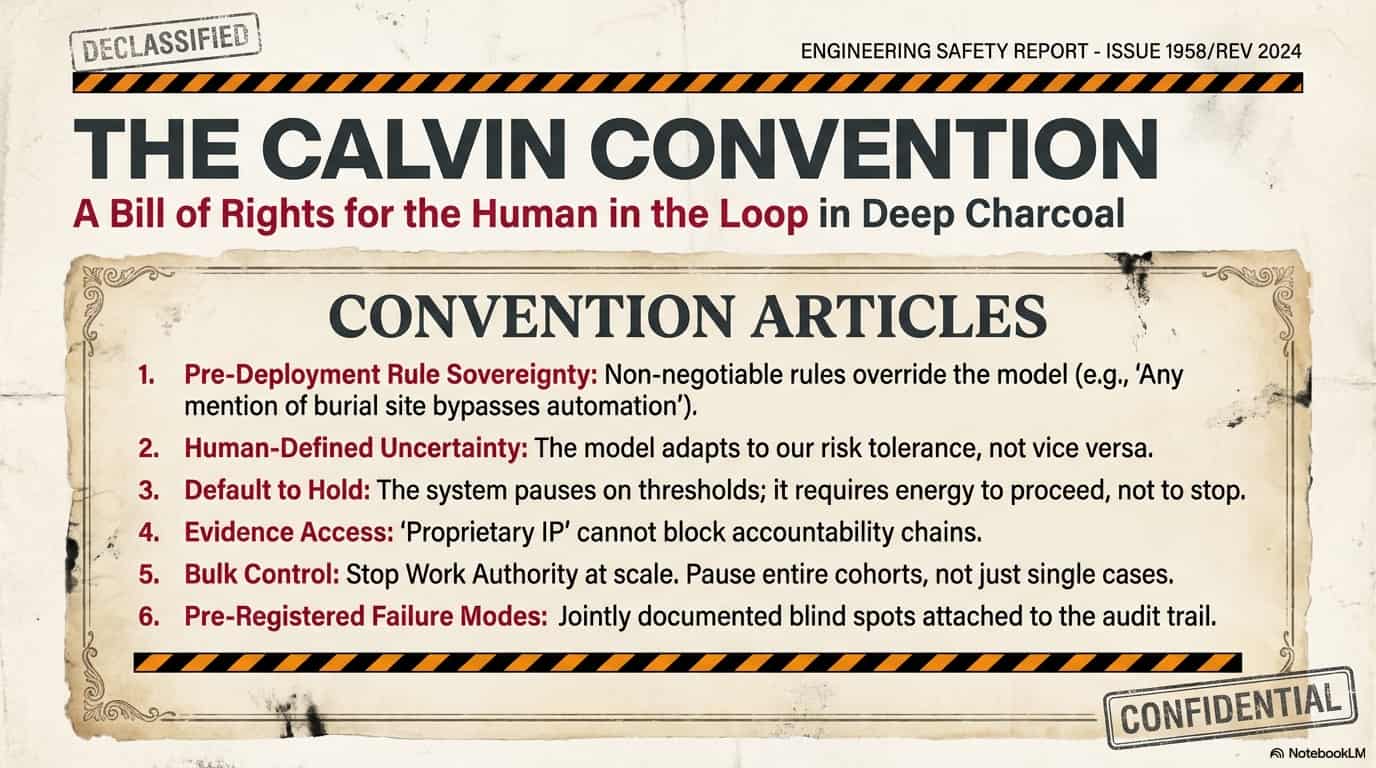
Six contractual mechanisms that encode pre-action constraints, refusal rights, and accountable continuation as architecture.
Ask about the Watchdog
Answered from the practice's own material, with sources.
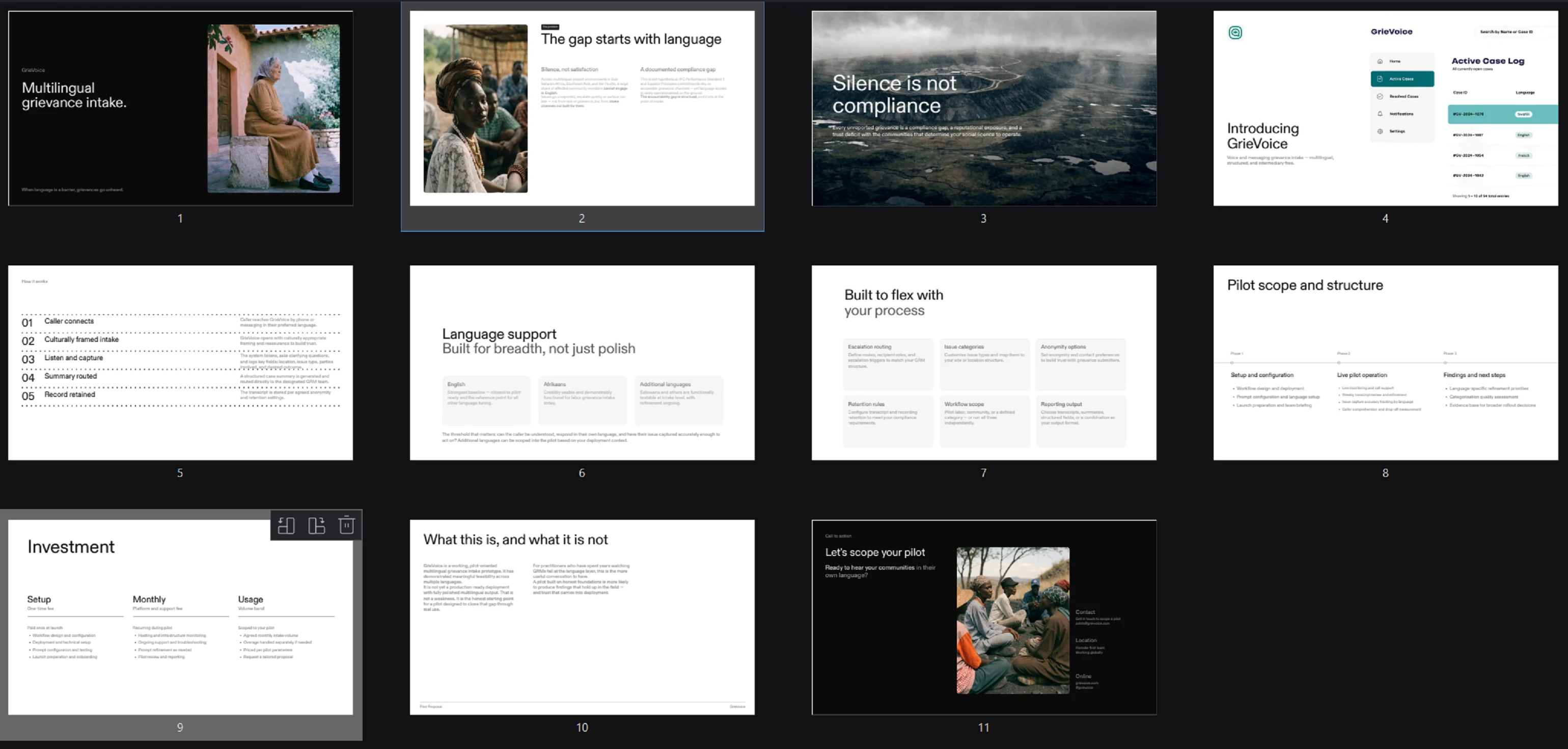
Multilingual grievance intake infrastructure for worker voice, community reporting, whistleblower channels, and scoped pilots.

Consolidated counter-narrative dashboard for AI companion guardrails, withdrawal risk, and the outcomes nobody is measuring.
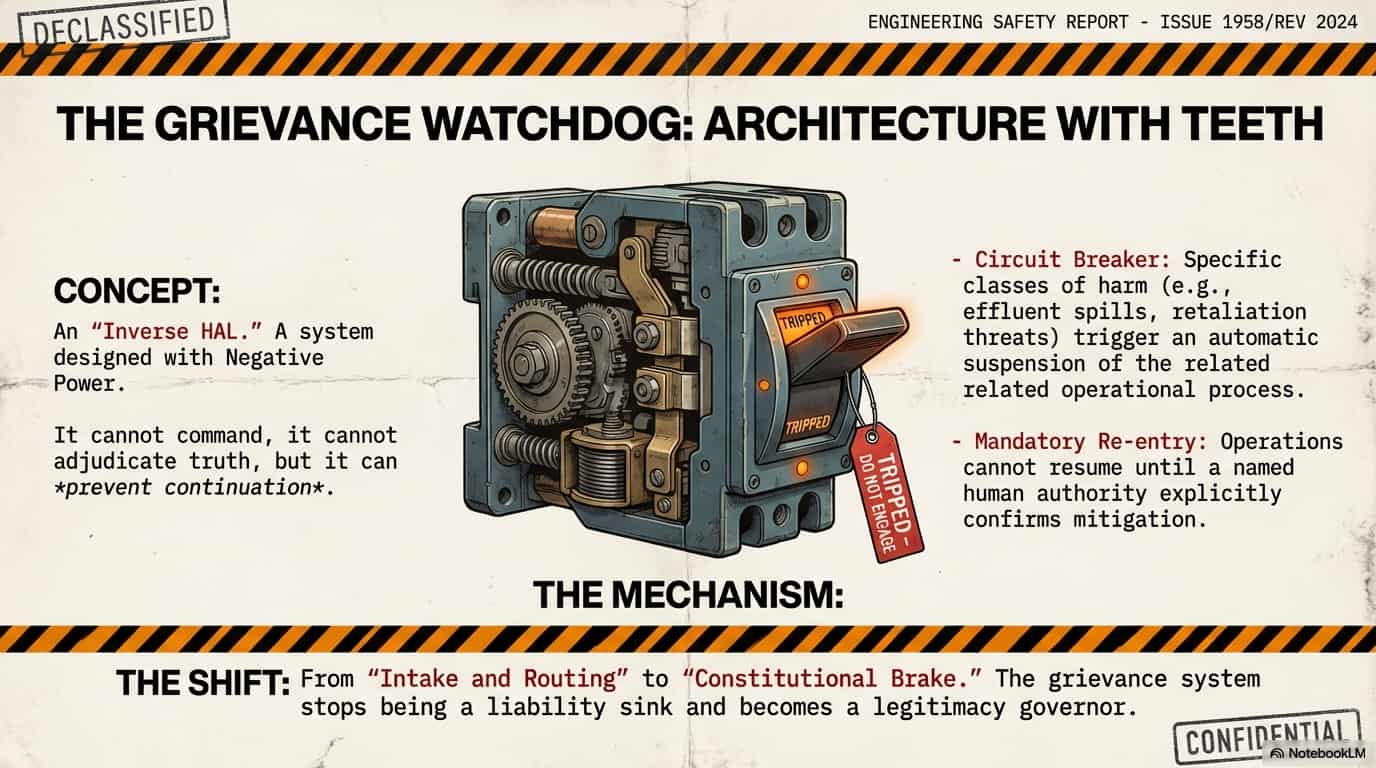
Architectural principles for accountable listening, escalation, and pause capacity.
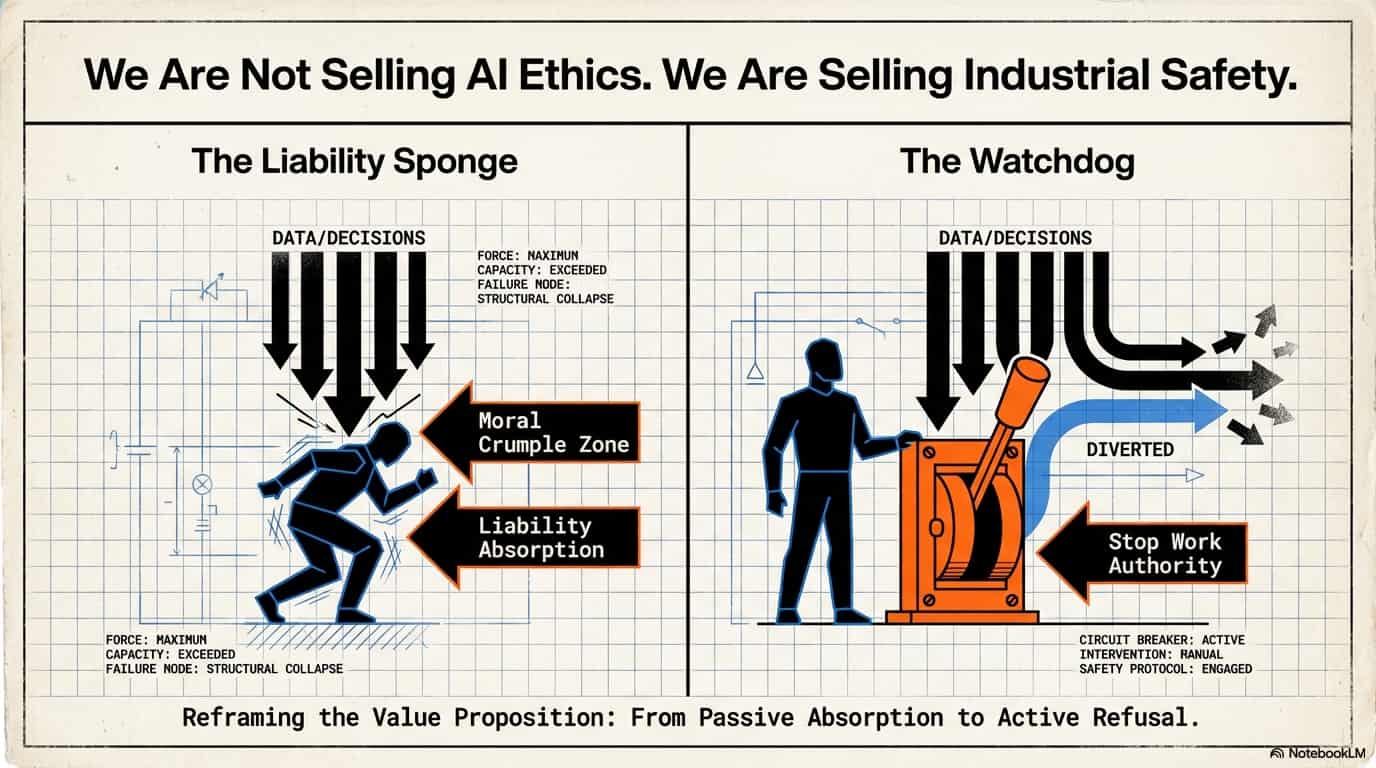
The thesis piece: when AI outperforms the gold standard of ethics.