
H∞P Training module
The Audit Trail
AI-use guidelines for associates and contractors. What to document, how, why.
Appears in tracks
Training module
What this module teaches
The audit trail is treated as evidence architecture: what was generated, checked, changed, approved, and why.
Participants learn
- Why AI-assisted work needs provenance, not just final approval.
- How to separate model contribution from human judgment.
- How logs become legal and governance instruments.
Practice work
- Trace an output back to prompts, source material, assumptions, and edits.
- Identify missing version history or missing evidence access.
- Draft an AI-use documentation rule for associates or contractors.
Outputs
- AI-use documentation checklist
- Evidence trail template
- Audit failure triggers
Visual prompts
Recognise the failure pattern.

Trust is not a defense
A forensic audit prompt: trust is irrelevant when a workflow has to be reconstructed under pressure.
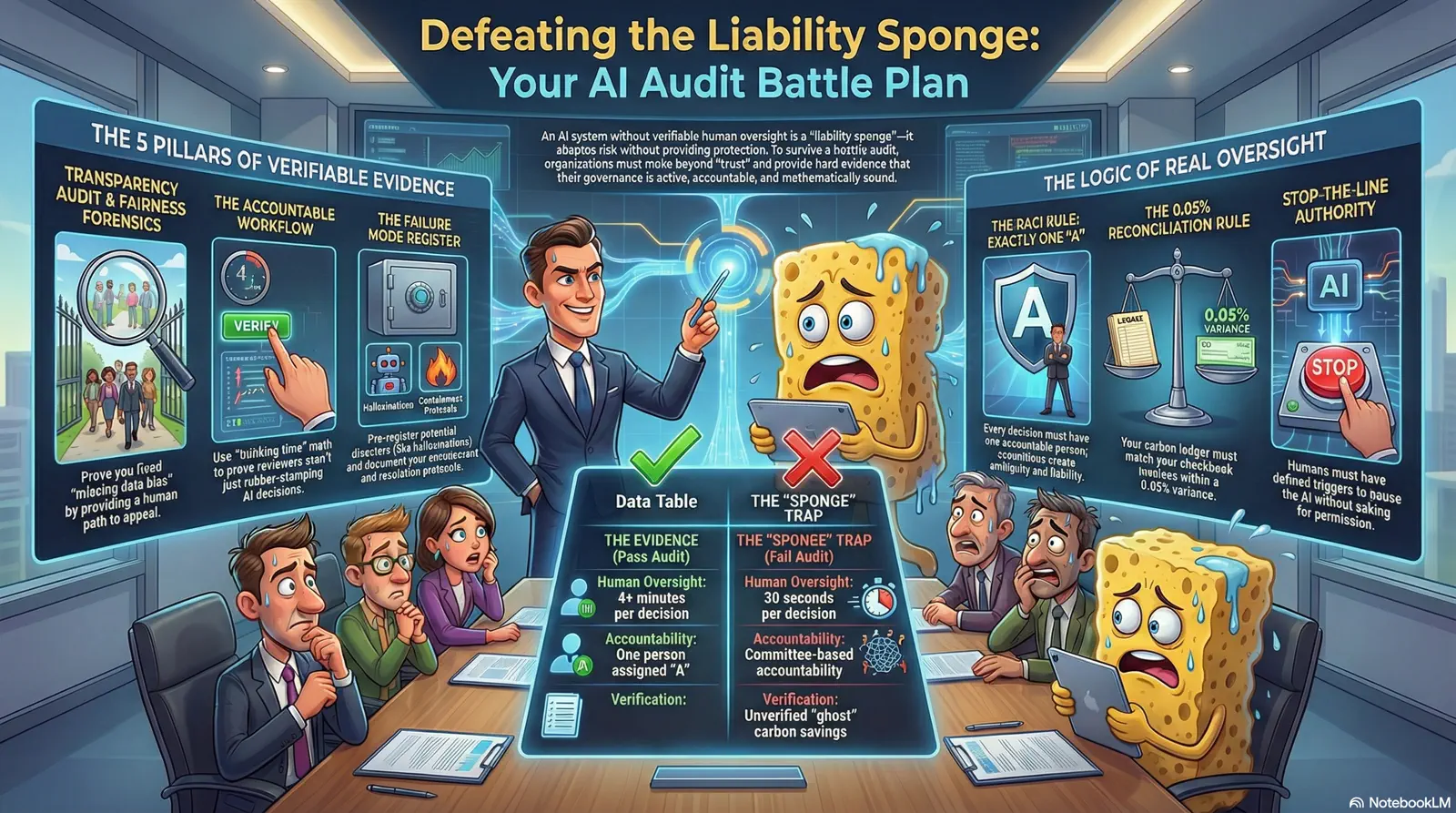
Defeat the sponge audit battle plan
A workshop visual for making audit defense about reconstructable evidence, not post-hoc blame.
Related materials
Open the supporting assets.
Deeper practice
How this module can expand in a workshop
Long-form teaching material should consolidate audit trail episode material, Strategic AI Brief templates, and procurement evidence rules.
In a live session this can become exercises, review prompts, templates, and team-specific examples.