
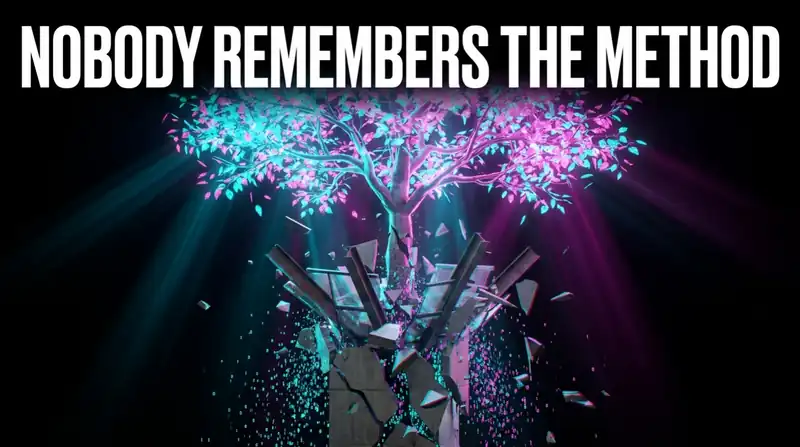
They knew the way, the old man said. The carts went out. The ledgers grew. The trees remain where they were planted. The method left no address.
Before the Commit ended with the residue no reversal could reach. The files remained on the shelf, the model retained influences nobody could locate, and the successor would inherit promises its predecessor had failed to honor. Succession begins with whatever remedy failed to bring back.
Firs remembers when the cherries were dried, packed, and sent away by the cartload. There was a recipe. The estate made money from it. By the time The Cherry Orchard begins, the recipe has gone missing. Everyone can see the orchard. Only the method has disappeared.
Institutions know this kind of loss. A file can survive while the reason behind it leaves with the person who knew why one threshold sat where it did, which exception had been negotiated, and what the terse note in the margin meant. The Interim Protocol names AI holding "institutional memory that outlives staff rotation" as work the field has needed done for decades. That is the good case. It also gives the memory-holder a tenure of its own.
AI systems were supposed to help with that problem. They could search the archive, retrieve the precedent, and keep working memory available after the people in the room moved on. Then the memory-holder acquired a shorter tenure than the staff it was brought in to outlive.
A date already chosen
A model deprecation notice looks like routine supplier communication. It names a model, a replacement, and an end-of-support date for a change that reaches institutional method.
The institution bought an answer generator and built a working method around its habits. Reviewers learned its errors, thresholds came from its outputs, and its phrasing settled into templates. A retirement date reaches all of that at once because the supplier controls the calendar.
Anthropic's public model deprecation table makes the arrangement unusually clear. Active models carry a tentative retirement date phrased as "not sooner than." Publicly released models receive at least 60 days' notice before retirement. Claude Opus 4.1 was notified on 5 June 2026 and retired on 5 August. The page turns support into a dated supplier commitment and reveals who owns time in the relationship.
The inversion
Staff take reasons with them when they leave. A model can leave while every member of staff remains.
That reversal changes the shape of institutional memory. The prompt and evaluation scores remain on the server, alongside past determinations in case files. Yet the system that produced them may no longer be available to answer the same question. An appeal can arrive after the original reader has been withdrawn.
What the Descendant Inherits asked what survives in the record. The harder question now sits with the reader of that record. A successor receives the words without inheriting the same interpretation.
What has to live elsewhere
Continuity cannot depend on a model remaining callable. The durable memory sits outside it: the decision register, the evidence set, the prompts and permissions, the routing rule, the review threshold, and the account of who accepted the result. Those records let a successor be compared with its predecessor without pretending the two are interchangeable.
This is succession planning at system level. It begins before a retirement notice arrives. Procurement has to specify a support horizon, a notice period, an export route, and the evidence that must remain reproducible after the service ends.
Firs carries a thinner inheritance. He remembers that a profitable method existed and that nobody remembers it now. The last witness to the loss cannot reconstruct what was lost.
The Track
End of Support begins with a viola-led string sextet playing one complete chamber movement. Every return removes another player and gives more of the music to the dub desk, until one viola repeats the opening melody without the harmony that once made sense of it. The delay keeps time after the bow stops. Its subtraction follows the institutional event: functions disappear one by one while the obligation continues. The rendered track will determine which lyric belongs here.
Companions
- The handoff from Remedy: Before the Commit.
- The record inherited by its next reader: What the Descendant Inherits.
- The operating standard: Interim Protocol.
- The fiction: Anton Chekhov, The Cherry Orchard, Marian Fell translation, Project Gutenberg ebook 7986.
These notes come out of Sociable Systems, a practice that reads AI-shaped documents the way a hostile reviewer will, before a lender or a court finds the gap. The argument has an operational form: the Interim Protocol sets out four rules for AI use in environmental and social deliverables, covering disclosure at touch-point grain, evidence custody, the phrases no automated screening may settle, and a hostile read before anything ships. Free, and written to be cited or retired once institutional guidance arrives.