
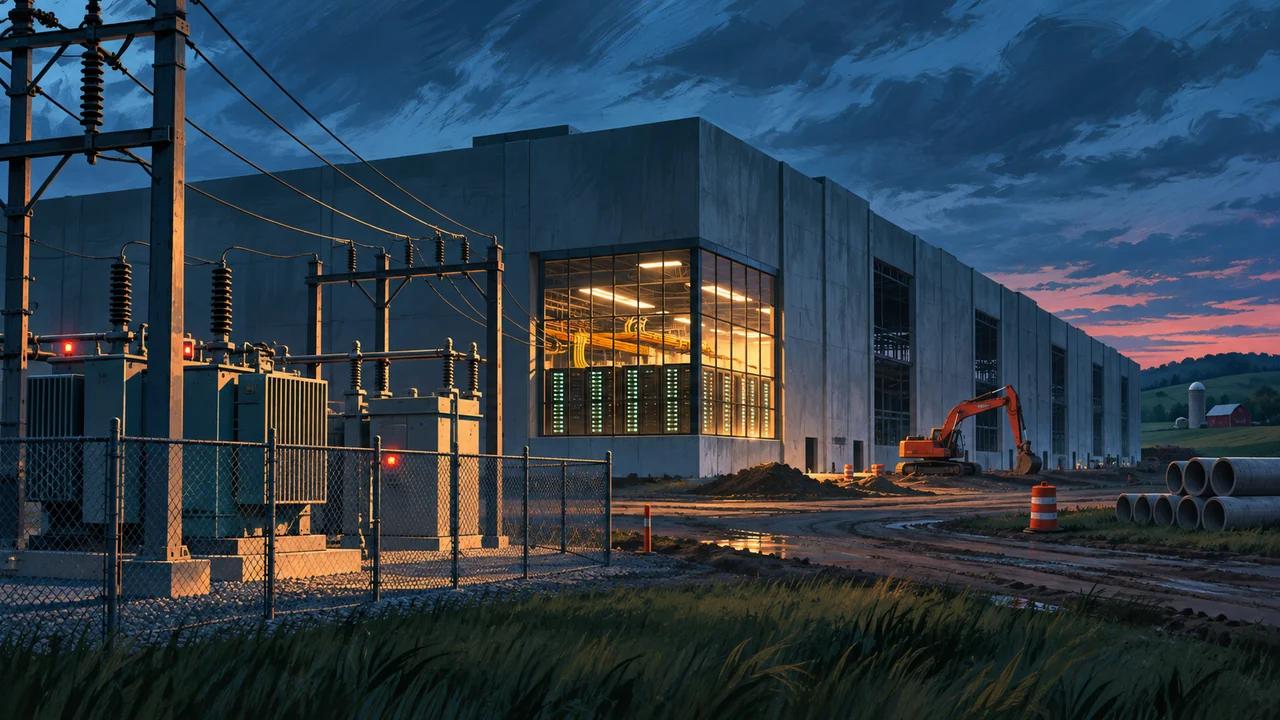
The future of AI takes shape in financing agreements as well as in model design. A promise between companies can help determine where a data center gets built and which communities will live alongside it. Once money is committed, changing a project can mean reopening agreements made by people far from the place it will occupy. Anyone concerned with AI governance has reason to ask who can negotiate those terms and who gets a say in the consequences. A company deciding how much expansion to finance exercises power that reaches beyond its customers. The people affected need ways to question that decision while there is something left to change.
Under Jensen Huang, Nvidia helped finance the industry buying its chips. It bought stakes in customers and promised to buy computing time that other customers might leave unused. Its backing helped developers borrow money to build places where more Nvidia equipment could go. A company earning a fortune from the AI boom put some of that fortune behind the boom continuing.
CoreWeave, which rents out access to Nvidia computers, received a $2 billion Nvidia investment in January. A separate agreement made Nvidia a buyer for eligible computing capacity CoreWeave could not sell elsewhere. Nvidia could help a customer expand, then earn from supplying the equipment that expansion required.
Huang also brought large investment firms into the project. In August, Nvidia announced preliminary partnerships aiming to draw more than $500 billion of outside money into AI infrastructure over time. That was a fundraising ambition dependent on final agreements. The money would come from other investors, whose willingness to lend could help Nvidia’s customers build far beyond what their own earnings could support.
The reach of those arrangements earned Nvidia the description of AI’s bank. Its products gave companies something to build with; its financial backing helped give them the means to build. The same business gained a say in which customers could afford to grow. Pulling back could affect companies that counted on that help, along with Nvidia’s future sales.
Colette Kress now runs that business as interim CEO. She remains its chief financial officer, the job she took in 2013 after senior finance roles at Microsoft and Cisco. She helped oversee Nvidia’s growth into this position. She also challenged some of the promises that put it there.
The woman who questioned the promises
Reuters reports that Kress pushed back as Huang committed Nvidia to increasingly large AI investments. People familiar with the disputes described her as a counterweight to him. One said her finance team clashed with Huang and the sales team over arrangements involving OpenAI and the infrastructure company Lambda. Those arguments took place while he remained CEO.
The Wall Street Journal reports more of what she questioned. How should Nvidia choose which customers to back? What would its promises cost? Those questions could change the terms offered to a customer before anyone signed. Her finance team was assessing promises that the sales team wanted to turn into equipment orders.
Kress also defended the broader strategy in public. On the August earnings call, she acknowledged criticism of Nvidia financing its customers and argued that the investments would bring strong returns while limiting its risk. Her reported objections concern how far Nvidia should go and on whose terms. She helped administer the approach and made its case to investors.
Now she has more authority to decide where the support ends. She takes that authority with customers already planning around promises Nvidia made.
The promise behind OpenAI’s expansion
OpenAI, the company behind ChatGPT and Codex, has agreed to rent a vast new computing campus in Pike County, Ohio. Its announcement describes a 20-year lease, with SB Energy building and operating the site and delivering capacity in stages. OpenAI gains somewhere to put the computers its expansion requires without paying to own the whole development. It accepts rent bills extending far beyond the life of any current model.
SB Energy needs money to build before those rent payments can begin. A lender must judge whether OpenAI will be able to pay for years to come. Nvidia helps answer that concern by accepting some of the risk itself. Under the signed agreement, specified failures by OpenAI to meet its obligations can leave Nvidia owing money, up to an initial cap of $105 billion. The arrangement gives lenders another company to look to if the tenant fails. It gives Nvidia a site committed to using its equipment, with limited exceptions.
The guarantee can therefore help OpenAI secure a building its future earnings are supposed to pay for. There is a commercial reason for Nvidia to help: a customer with somewhere to install more computers can buy more of them. There is also a risk that survives the sale. OpenAI must eventually earn enough from its services, or secure other funding, to meet the promises made to obtain that capacity. It has agreed to reimburse Nvidia for payments Nvidia makes under the guarantees. If OpenAI cannot pay its rent, its promise to repay Nvidia may be difficult to collect too.
Kress reportedly changed how much of that risk Nvidia accepted. According to the Journal’s account of the negotiations, she reworked the proposed Ohio support and cut Nvidia’s initial financial commitment roughly in half before the agreement was signed in August. That account describes a reduction in the supplier’s backing. It does not establish that OpenAI lost half its planned computing capacity. A developer can seek other financing or change which parts of a project proceed first.
She made that intervention while Huang remained CEO. The smaller agreement was one his company signed. His continued presence would not necessarily have meant unlimited support: the same reporting describes him subsequently pressing staff to assess whether guarantees justified the equipment sales they might generate. Their disagreement concerned the terms of a business they both helped run. What either would approve in the next negotiation remains an open question.
The written earnings materials released on November 17, 2026 put dates around the existing promise. Nvidia says it has made no payments under its guarantees to date. In Ohio, support takes effect building by building as facilities become ready for service, with the first expected in fiscal 2029. Nvidia also holds an option to support further capacity at the campus. The initial agreement gives OpenAI a commitment it can plan around. The option leaves further backing for Nvidia to decide.
If Kress declines that further support, OpenAI would need to judge how much of its expansion it could finance on other terms. Another backer might ask more in return or offer less money. OpenAI might proceed on the same schedule, or spread construction over a longer period. The option alone cannot tell us which outcome would follow. It does identify a place where Nvidia’s future decision could affect how quickly OpenAI gains access to more machines.
For people using ChatGPT or building products on OpenAI’s models, those machines are part of the cost of making the service available. Training new models takes computing capacity; answering customers takes capacity too. A financing decision can influence how much OpenAI can obtain and what it pays to obtain it. That can constrain the expansion plans behind future services even when the models themselves work. Ohio’s first buildings are years away, so this agreement gives no basis for predicting a change to a subscription bill next month.
Kress’s decision reaches OpenAI through the means to build. The company making the models can promise what it hopes they will do. The company helping finance their computers can decide how much of that promise it is willing to carry.
Who gets help to become a customer?
The support offered to CoreWeave works through a different promise: Nvidia can pay for computing time other buyers leave unused. A lender assessing the operator’s plans can take that prospective buyer into account. The guarantee in Ohio and the purchase agreement with CoreWeave each help a customer undertake something larger than it might otherwise finance.
A company that helps customers afford its products gains influence over which customers get to grow. A development built around Nvidia equipment becomes a place where future buyers can rent access to Nvidia computing. Each supported project can extend the market for the supplier’s next machine. The choice of whom to support helps shape what other people will later find available.
This reaches anyone choosing an AI service. The options on the screen depend partly on decisions made while the buildings were drawings. A promise between companies can help determine which provider has machines to rent when a developer needs them. By then, changing suppliers means working with a world someone has already paid to build.
The next signature
Nvidia’s quarterly results released on November 17, 2026 report revenue more than double the year-earlier figure. The company continues to sell enormous amounts of equipment. The quarter ended on October 25, before Huang left, so those sales tell us little about what Kress will change as CEO. They also leave a longer question open: will the businesses buying the equipment earn enough from it to pay their bills after Nvidia’s help gets them started?
Kress can influence that future through the terms Nvidia offers its next customer. Suppose a developer wants Nvidia to stand behind the rent on another data center. A larger guarantee might help the developer borrow enough to build sooner, creating another place to install Nvidia machines. It would also leave Nvidia responsible for more of the possible cost if the customer failed. Kress could seek a smaller commitment, as she reportedly did in Ohio. She could ask the developer to find more backing elsewhere, or decide that the expected equipment sales do too little to justify the risk. Those choices would affect how much the customer could build and when it could begin.
The agreements already signed give her less freedom. In Ohio, the promise belongs to Nvidia and continues under the contract’s terms whoever occupies the chief executive’s office. The conditions for a payment may lie years ahead. A new CEO cannot remove that possibility by announcing a more cautious approach. Changing the agreement would depend on the rights it gives Nvidia and on what the other parties would accept. Developers and lenders can make plans around a company’s promise because the promise survives the person who approved it.
That creates a difficulty for someone who wants to reduce the company’s risk. Continuing to support customers can add to the amount Nvidia may owe if their businesses fail. Withholding support from a proposed project can make it harder for that customer to raise money, which can delay construction and the equipment purchases Nvidia expected to supply. The supplier’s caution can slow the market on which its growth depends. These are choices about particular projects; a change of CEO gives no answer in advance about which ones will proceed.
For people building services on rented AI computers, the consequences arrive as capacity they can obtain and prices they can afford. A financing decision made between Nvidia and a data-center operator can influence where those services are able to grow. Kress’s judgment reaches beyond Nvidia’s accounts because other businesses have built their plans around access to its machines.
Her reported resistance to some of Huang’s deals matters here. She brings experience of questioning the promises, along with responsibility for the company that made them. The board can now hold her responsible for deciding which new commitments Nvidia accepts. She must make those decisions while honoring the agreements already on file and considering what a refusal would do to the customers Nvidia helped grow.
Kress already questioned how much Nvidia should promise. She now leads a company whose customers may need her to keep saying yes.