
Arc Consolidation | Episodes 312–318
A ten-year-old on a borrowed spotted mare sees the pole coming and freezes. Her teacher calls from across the ring. The girl lifts her eyes and picks out a tree beyond the fence. The mare still has to clear the rail. The rider can see where she wants to go.
In Eyes on the Far Side, the tree turns to glass. A grandmother’s story hangs from one of its branches. Suppose your grandmother told the story of a flood in an interview at the local archive. You remember what she called the crossing. You want to hear the pause before she says the name.
Who Counts the Gain? ended with the traveler asking to see the original plan before the assistant sang about the saving. An archive can ask for the equivalent before it installs search. What did the listener come to hear? The answer gives the archive something to compare with whatever its new tools deliver.
The beginning of the hour
The catalog gives you the date and the interviewer’s name. It gets you to the beginning of the recording. A volunteer who knows the collection might recognize the crossing and tell you where to listen. If she’s away, you can put on the recording and wait for the story.
The Latah County Oral History Collection gives readers another route. The county historical society recorded the interviews. The University of Idaho Library made the existing typescripts searchable and linked passages to audio. A reader can select a passage and hear the recording from that point. The route depended on people who prepared the transcripts and made the timestamps usable.
UtopAI’s worked example imagines a local archive trying a version of that route. Before making an index, ask a listener to show you how they would look for the crossing today. Give the catalog and the volunteer their due. With a transcript in place, watch whether the listener can reach the passage and record what help they needed. Keep a separate record of what the transcript got wrong. You can hear the right passage even when the words on the screen are a little off.
The word the listener brought
Suppose the transcript puts a common word where the grandmother says the crossing’s name. The tape still holds the story. The search box gives the listener an empty page. Even a transcript that gets nearly everything else right can lose the word that would bring this person to the recording.
A listener who hears the mistake can flag it. Someone at the archive has to decide what the correction should say and see it through to the index. Try the original search after the correction. If it still comes back empty, the next listener has inherited the same problem. If it brings up the passage, the archive can count the improvement and the work it took to make it.
What the index may return
The archive may let people hear a passage by appointment. A public search result that prints part of the passage changes who can read it. The Oral History Association’s guidance for interview participants explains how narrators can place restrictions on access and why they need to know when withdrawal becomes difficult. The imagined archive settles which material can appear in public search before it builds the index.
Test that boundary alongside the search for the crossing. If a result exposes a restricted passage, the archive has an access problem to fix before it extends the trial. If the passage stays out of public results, record that the restriction held. Someone with permission to hear it still needs a way to arrange a visit.
Where the mare lands
The archive might keep the catalog and the volunteer as its main routes. It could add a small index for the interviews whose terms allow it and whose search results hold up. A wider index would require evidence from the trial and people with time to review corrections. The account would show who found what they came for and who did the work that got them there.
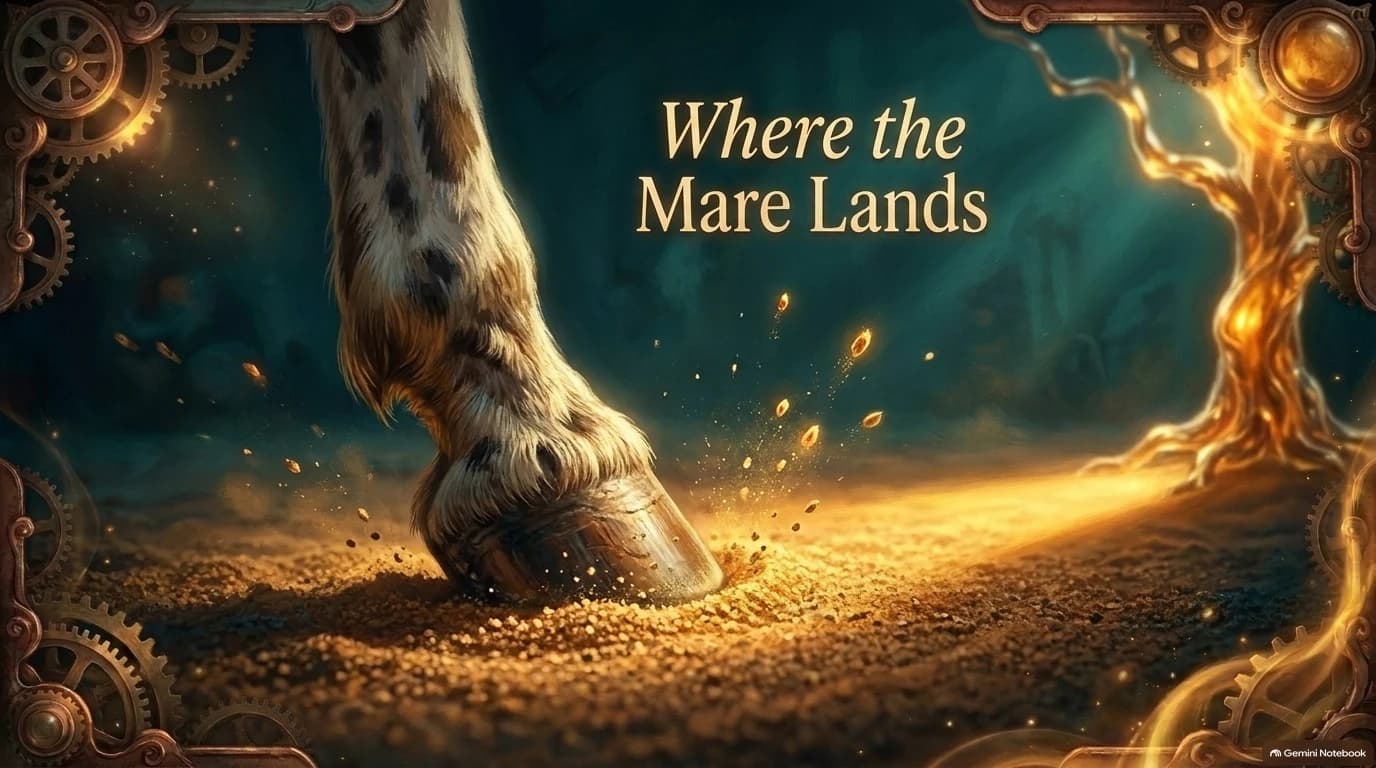
The girl can see the tree from the saddle. Across the ring, the teacher can see where the mare’s feet touch the sand. At the archive, the listener presses play. She knows whether she has found the crossing when she hears her grandmother say its name.
Episodes
- Pick a Tree
- The Story You Came For
- Back to the Voice
- The Name That Went Missing
- Who Fixes the Name?
- Who Gets to Hear It?
- Where the Mare Lands
Bibliography
khayali, ‘Eyes on the Far Side’, music video.
khayali, ‘UtopAI’, worked example, accessed November 2026.
Oral History Association, ‘For Participants in Oral History Interviews’, Principles and Best Practices, accessed November 2026.
University of Idaho Library, ‘About the Digital Collection’, Latah County Oral History Collection, accessed November 2026.